
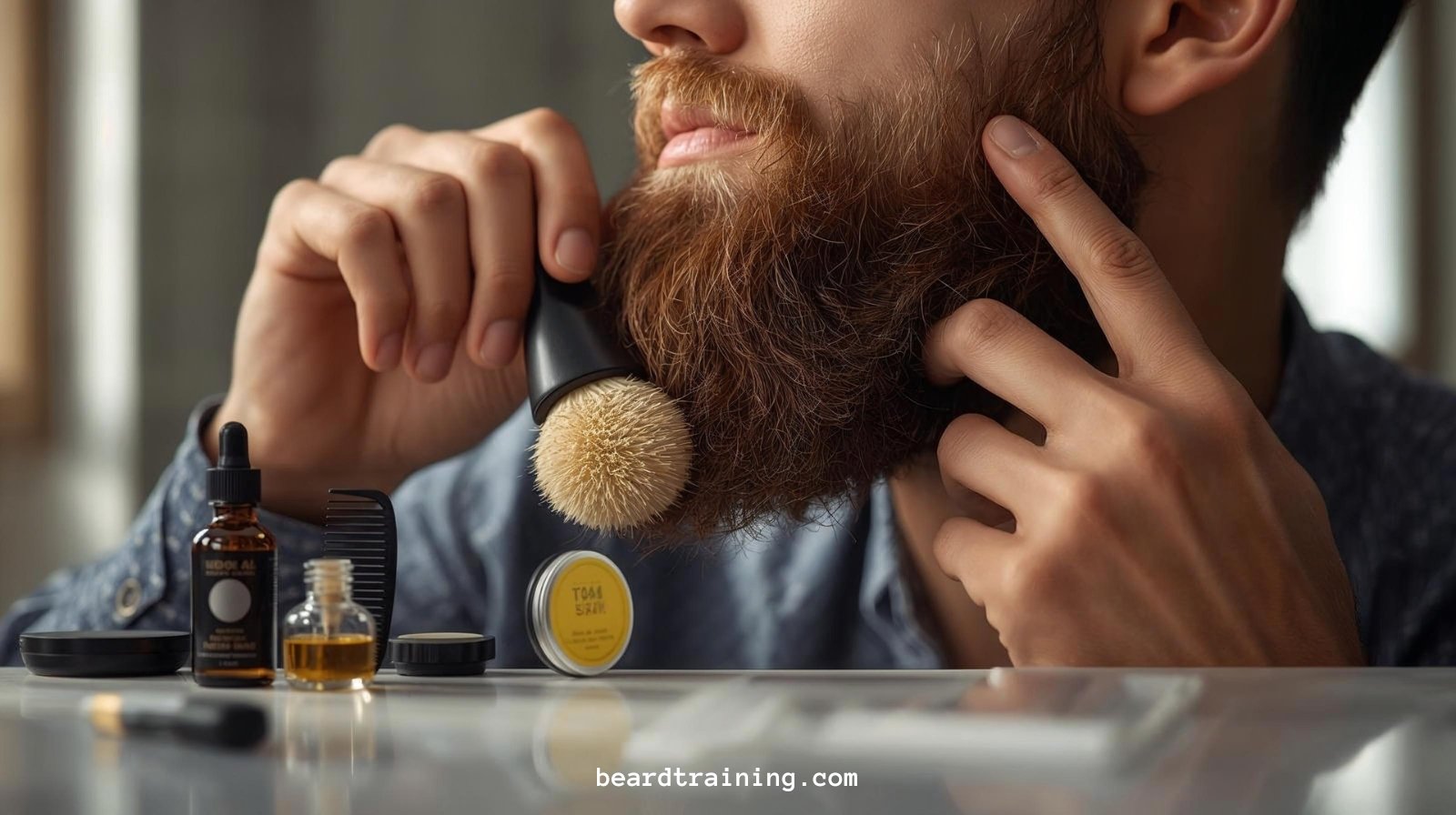
You stand before the mirror, running your fingers through the wiry, unpredictable strands of your beard. It’s growing, but it’s not yours yet. It lacks direction, shape, and that polished look you see on men who seem to have their style mastered. You’re past the initial itch, but now you face the real challenge: beard training. This isn’t about waiting for hair to grow; it’s about sculpting, guiding, and commanding every follicle to work in harmony.
A trained beard doesn’t happen by accident. Instead, it’s the result of deliberate techniques, precise tools, and daily rituals that transform a patchy, rebellious mess into a defined, confident statement. Whether you’re battling a beard that curls in every direction or one that simply refuses to look full, this guide is your blueprint. We’ll move beyond basic oiling and brushing into the advanced methodology of modern beard training. Ultimately, you’ll blend barber-level techniques with the science of hair growth. Get ready to learn how to train your beard, not just grow it.
The Core Philosophy of Beard Training: It’s About Direction, Not Force
Before you pick up a brush, understand this principle: Beard training is the art of convincing your hair to grow and lie in a desired pattern through consistent, gentle guidance.
You cannot change your genetics or follicle direction, but you can train the hair above the skin to align, lie flat, and enhance your facial structure. Therefore, the goal is to work with your beard’s natural tendencies, not against them. As a result, you create the illusion of density and intention with every stroke.
The 2026 Beard Training Toolkit: Your Arsenal for Control
The right tools are non-negotiable. In fact, using the wrong comb or brush can undermine weeks of effort.
| Tool | Spec & Purpose | Training Function |
|---|---|---|
| Boar Bristle & Carbon Fiber Hybrid Brush | Natural boar bristles distribute oils; integrated carbon fiber pins detangle without static. | Daily Training: Stimulates skin, trains hair downward, and polishes the surface layer for shine. Use on dry beards. |
| Sandblasted Acetate Wide-Tooth Comb | Anti-static, seamless teeth prevent snagging and breakage. | Post-Shower Detangling: Used on damp, conditioned hair to gently detangle before brushing. Sets the foundation for styling. |
| Beard Straightening Comb (Thermal) | Ceramic/tourmaline plates with adjustable heat. A 2026 game-changer for stubborn beards. | Strategic Styling: Not for daily use. Employ 1-2x weekly on low heat to temporarily relax extreme curls or cowlicks for better training adherence. |
| Beard Oil with High-Slip Formulas | Look for lightweight oils like jojoba, argan, or grapeseed combined with hydrolyzed proteins for slip. | The Training Lubricant: Reduces friction during brushing/combing, preventing breakage and making hair more pliable. |
| Beard Balm with Flexible Hold | Contains natural waxes (beeswax, lanolin) and butters for pliable, not crunchy, hold. | The Finishing School: Locks trained hairs in place after brushing, providing memory and combating frizz throughout the day. |
Barber’s Insight: “A client once told me his beard was ‘unruly.’ I watched him use a plastic pocket comb on his dry, coarse beard—it was like raking concrete. We switched to a boar brush on oiled hair, and in two weeks, his beard had a completely new demeanor. The tool isn’t just a tool; it’s a translator between your intention and your hair.” – Liam, The Grooming Guild.
The Foundational Beard Training Routine: A Step-by-Step Daily Protocol
Consistency is everything. Perform this routine once in the morning and optionally once at night.
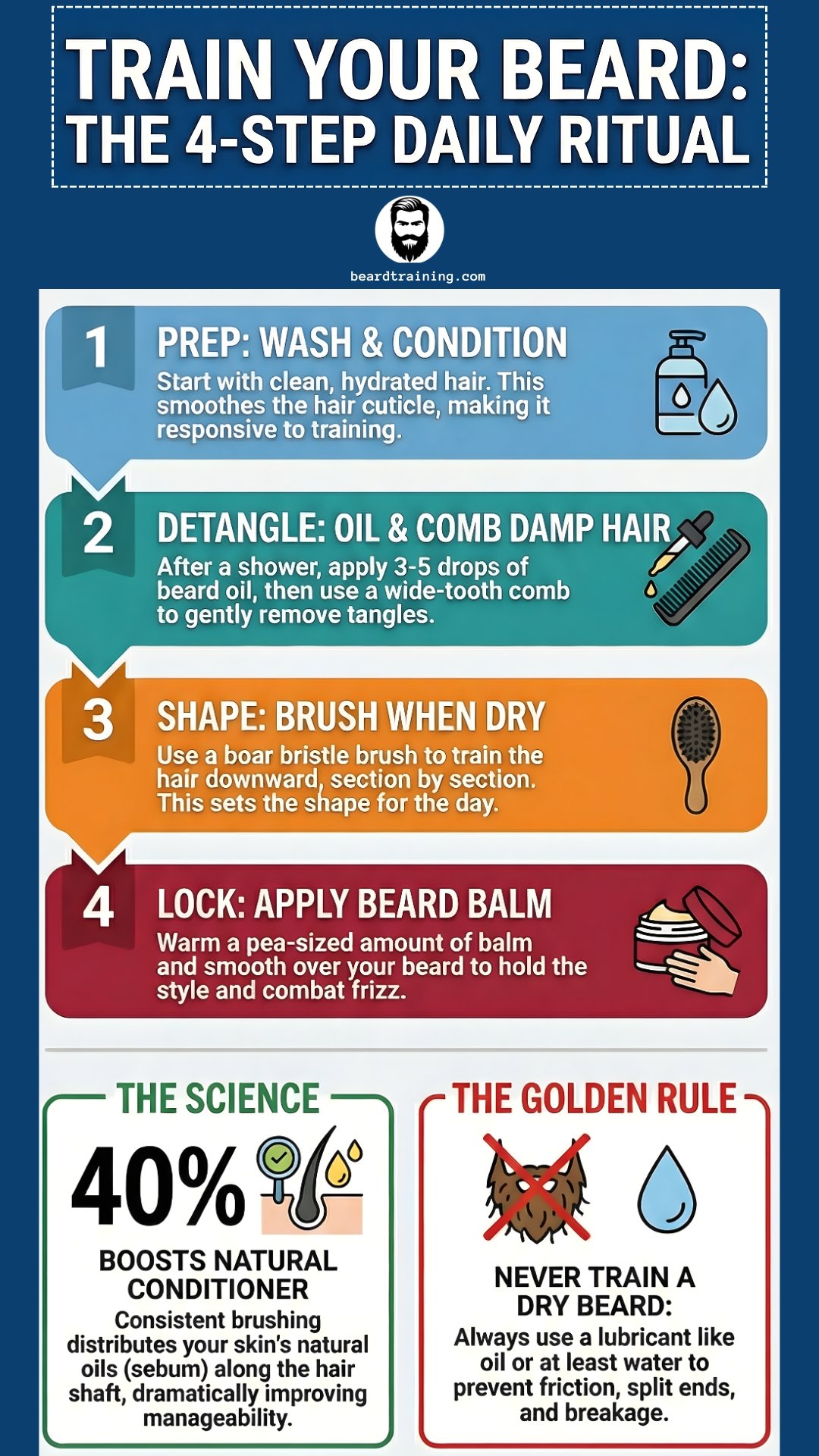
Step 1: Cleanse & Condition (The Reset)
Training dirty, product-laden hair is ineffective.
-
Wash: 2-3 times a week with a hydrating beard wash. This removes grime without stripping essential sebum.
-
Condition: Every time you wash, use a leave-in conditioner or beard softener. This is critical. It smoothes the hair cuticle, making each strand more responsive to training.
Step 2: The Wet Train (Post-Shower)
This is when hair is most malleable.
-
Pat your beard damp-dry (not dripping, not fully dry).
-
Apply 3-5 drops of beard oil, working it into the skin and through the hair.
-
Using your wide-tooth comb, start at the neck and gently comb downward. Follow the natural grain of your growth. This initial pass removes tangles without stress.
Step 3: The Dry Train (The Main Event)
This sets the shape for the day.
-
Take your hybrid brush. Starting from the bottom of your neck, use medium pressure to brush downward in slow, sweeping motions.
-
Brush section by section: Don’t just scrub the surface. Part your beard and brush each subsection toward your chin.
-
For mustache training, use a small, clean toothbrush or dedicated mustache comb to brush hairs to the sides, away from your mouth.
Step 4: The Lock (Seal in the Training)
-
Warm a pea-sized amount of beard balm between your palms.
-
Glide your hands over the surface of your beard, following the downward direction you just brushed. This adds a light hold and nourishes the hair.
-
Do a final, light brush-through to ensure even distribution and perfect alignment.
Advanced Training Techniques for Specific Challenges
Training a Curly or Wiry Beard
Curly beards require more hydration and patience.
-
The “Pulse Hydration” Method: At night, apply a heavier beard butter. In the morning, brush before your shower to detangle, then wash. The warm water and conditioner will help reset curls into a more uniform wave as you train them damp.
-
The Finger-Twist: For individual unruly curls, apply a tiny bit of balm and gently twist the curl between your fingers in your desired direction as it dries.
Filling the Illusion of Density in Patchy Areas
Training can visually minimize patches.
-
Directional Layering: Train the longer hairs from the denser areas to gently sweep over the sparser patches. Use balm to hold these longer hairs in this covering position.
-
Blow-Drying (Low Heat): On a cool setting, use a blow dryer with a concentrator nozzle while brushing a patchy area downward. This can temporarily add volume and help hairs lay in a covering pattern.
Training the “Neckbeard” and Cheek Lines
Sharp lines are a sign of a trained beard.
-
Neckline: After brushing, use a precision trimmer (no guard) to redefine your neckline every 5-7 days. A clean line makes the entire beard look intentional.
-
Cheek Line: Use a razor or trimmer to maintain a crisp, natural cheek line. A sharp upper boundary frames the face and makes the beard appear denser.
The Science & Support: Why Training Works
Understanding the science helps you train smarter.
-
Hair Memory: While hair is dead, repeated mechanical stimulation (brushing in one direction) can help overcome the hair’s natural curl pattern. Specifically, this is most effective when assisted by hydrating products that soften the keratin.
-
Sebum Distribution: Regular brushing distributes your skin’s natural oils from the base to the tip of each hair. Consequently, this acts as a built-in conditioner, improving hair health and making it more cooperative. A 2024 study in the Journal of Cosmetic Dermatology found that consistent brushing increased sebum distribution along the hair shaft by up to 40%, directly improving manageability.
-
Follicle Stimulation: The gentle massage of brushing increases blood flow to the hair follicles, potentially encouraging a healthier growth environment.
The 5 Cardinal Sins of Beard Training (Mistakes to Avoid)
Avoid these common pitfalls to ensure your training is effective.
-
Training Dry: Brushing a dry, unoiled beard causes friction, split ends, and breakage. Always use a lubricant (oil or dampness).
-
Using the Wrong Brush: Nylon brushes or fine-tooth combs on a dense beard create static and snap hairs. Invest in the proper hybrid or boar bristle brush.
-
Inconsistency: Training once a week is like going to the gym once a week—you’ll maintain nothing. Daily, gentle routine is key.
-
Over-Reliance on Heat: Daily use of high-heat straighteners or dryers will fry your beard, causing long-term damage and brittleness. Use heat sparingly and strategically.
-
Neglecting the Skin: Training starts at the follicle. If the skin beneath is dry, flaky, or inflamed, hair will grow weak and be harder to manage. Oil is for the skin first, beard second.
Beard Training FAQ
Q1: How long does it take to see results from beard training?
A: For basic manageability and reduced frizz, you may see improvements in 1-2 weeks. However, for significant changes in growth direction and pattern, expect to commit to a consistent routine for 4-8 weeks. Beard training is a marathon of subtle wins.
Q2: Can beard training actually make my beard grow thicker?
A: No, it cannot increase the number of follicles you have (density). However, by training hairs to lie flat and in unison, it creates the visual illusion of a thicker, fuller beard. Additionally, healthier, unbroken hairs also appear more substantial.
Q3: Is it better to train my beard in the morning or at night?
A: Both. Morning training sets your look for the day. Meanwhile, nighttime training (a lighter brush-through and application of butter) allows products to work overnight and helps maintain direction. Think of it as morning practice and nighttime recovery.
Q4: My beard hair is very coarse. Will training soften it?
A: Training alone won’t change the fundamental texture. However, the combination of consistent conditioning (oils, balms, butters) and training will dramatically improve softness and pliability. For instance, coarse hair benefits immensely from high-slip oils during brushing.
Q5: Should I use a beard roller (derma roller) as part of training?
A: Derma rollers are a growth stimulation tool, not a training tool. They work at the follicular level to potentially enhance growth. Therefore, they can be part of a broader regimen, but they do not replace the daily brushing and grooming that trains the visible hair.
Q6: Can I train a very short beard (stubble)?
A: Absolutely. Applying a light oil and brushing even stubble can train the hairs to lie flat against the skin. As a result, this reduces the “prickly” look and encourages them to grow in a more uniform direction from the start.
Conclusion: Your Beard is a Student—Be a Great Teacher
Beard training is the silent dialogue between you and your facial hair. It’s a practice of patience, observation, and consistent, gentle leadership. Importantly, you are not wrestling your beard into submission; you are guiding it to reveal its best possible self. Consequently, the results—a beard that complements your face, moves with purpose, and radiates health—are worth every moment of the ritual.
Furthermore, this journey transforms more than just your appearance. The daily discipline of training cultivates patience, attention to detail, and self-care. Finally, your beard becomes not just a style, but a testament to your commitment.
Start tonight. Wash, condition, oil, and take that first deliberate brush stroke. Your beard is ready to learn. Are you ready to teach?